Posts

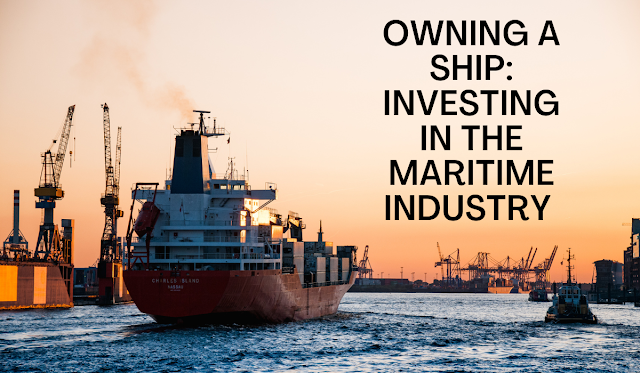
Owning a Ship: Investing in the Maritime Industry
Image
Owning a Ship: Investing in the Maritime Industry  Owning a ship Are you interested in investing in the maritime industry? Have you considered owning a ship? Owning a ship can be a great investment opportunity for those looking to enter the maritime industry. In this article, we will explore the benefits and challenges of owning a ship, as well as the various factors to consider when investing in this industry. Understanding the Maritime Industry Before investing in the maritime industry , it is important to understand the basics. The maritime industry encompasses a wide range of activities, including shipping, shipbuilding, and port operations. This industry is essential for global trade and transportation, making it an attractive investment opportunity. The Benefits of Owning a Ship There are several benefits to owning a ship, including: Potential for Profitability Owning a ship can be a profitable investment, particularly if the vessel is used for commercial purposes, such as t...

Fractional Ownership: Unlocking Access to High-Value Assets

Fractional Ownership: Unlocking Access to High-Value Assets Fractional ownership is a term that has gained popularity in recent years. It refers to a type of ownership where multiple individuals or groups have a share in a particular asset or property. Fractional ownership can be a great way to invest in expensive assets that would otherwise be out of reach for most people, such as private jets, luxury vacation homes, and yachts. In this article, we will dive deeper into the concept of fractional ownership and explore its benefits, drawbacks, and how it works. What is Fractional Ownership? Fractional ownership is a type of co-ownership where two or more individuals or groups collectively own an asset or property. Each owner holds a fractional interest in the asset, which entitles them to a corresponding share of the ownership rights, benefits, and responsibilities. Fractional ownership is often used for high-value assets such as private jets, yachts, and vacation homes. By pooling th...

How to Tokenize Assets Using Blockchain: A Comprehensive Guide

Image
How to Tokenize Assets Using Blockchain: A Comprehensive Guide Blockchain technology has revolutionized the way we think about asset ownership, making it easier and more secure than ever before. Tokenization is a process of converting a physical asset into a digital token that can be stored on a blockchain network. By tokenizing assets, it is possible to enhance liquidity, transparency, and efficiency while reducing the risks associated with traditional asset management. In this article, we will explore the process of tokenizing assets using blockchain technology and the benefits of doing so. What is Tokenization? Tokenization is a process of converting a physical asset into a digital token that can be stored on a blockchain network. Tokens are unique digital assets that represent a specific value or asset. These tokens can be traded, transferred, or held by individuals just like traditional assets. The process of tokenization involves creating a digital representation of a physical ...

Navigating the Waters of Maritime Investment: A Comprehensive Guide

Image
 Navigating the Waters of Maritime Investment: A Comprehensive Guide Introduction: The maritime industry has always been a vital part of global trade, serving as a backbone for the transportation of goods across the world. With the increasing demand for goods, the maritime industry is poised for significant growth, and with it, a rise in investment opportunities. In this article, we will explore the world of maritime investment, its potential, and the risks involved. Part 1: Understanding Maritime Investment Maritime investment is the process of investing in various aspects of the maritime industry. These investments can range from owning ships, ports, and shipping companies to investing in maritime infrastructure and related industries such as shipbuilding and repair, and logistics. Part 2: Why Invest in the Maritime Industry? The maritime industry has been a significant driver of the global economy, and its importance cannot be overstated. The industry has a vast potential for ...

Exploring the Potential of Blockchain-Based Projects and How They are Revolutionizing Industries

Image
Exploring the Potential of Blockchain-Based Projects and How They are Revolutionizing Industries Blockchain technology is revolutionizing the way businesses operate across various industries. With its ability to provide secure, transparent and decentralized record keeping, Blockchain-based projects have the potential to create new business models, streamline processes and enhance efficiency. In this article, we will explore the potential of Blockchain-based projects and how they are revolutionizing industries across the world. Introduction Blockchain technology is a distributed ledger technology that allows for secure and transparent record keeping without the need for a central authority. It provides a way for parties to transact with each other without the need for a middleman. Blockchain technology has been gaining traction in various industries due to its unique features that provide increased security and transparency. Importance of Blockchain-Based Projects Blockchain-based pro...

Shipping or Maritime Finance: An Overview of Types, Risk Management, Instruments, Key Players, and Emerging Trends

Image
Shipping or Maritime Finance: An Overview of Types, Risk Management, Instruments, Key Players, and Emerging Trends Shipping or Maritime Finance: An Overview The shipping industry is a crucial part of the global economy, with ships transporting over 80% of the world's trade. As with any industry, shipping requires financing to keep it running, and that's where shipping or maritime finance comes into play. In this article, we'll provide an overview of shipping or maritime finance , including its types, risk management, instruments, key players, and emerging trends. Types of Maritime Financing Maritime financing can be divided into two main types: debt financing and equity financing. Debt financing involves borrowing money to finance the purchase of ships or other assets. The most common forms of debt financing are bank loans and bond issuances. Bank loans are typically provided by banks or financial institutions and are secured against the assets of the shipping company. The ...

Exploring the Benefits of Alternative Assets Investment & Alternative Investment Funds

Image
 Exploring the Benefits of Alternative Assets Investment & Alternative Investment Funds Introduction:  What are Alternative Assets and How Do They Fit into Your Investment Strategy? Alternative assets are a category of investments that are different from traditional investments like stocks, bonds, and cash. They are called alternative investments because they offer a different way to diversify your investment portfolio and potentially achieve higher returns. Alternative assets can include anything from real estate investment trusts (REITs) to infrastructure funds, private equity investments, venture capital funds, and hedge funds. These investments offer investors access to assets that are not publicly traded, and they are often less liquid than traditional investments. Alternative assets are becoming more popular as investors look for ways to diversify their portfolios and reduce risk. However, investing in alternative assets also comes with its own set of risks, so it's...